
Last week the U.S. Food and Drug Administration (FDA) issued a groundbreaking announcement that it will start to phase out some animal testing requirements with the goal of eventually moving towards using animal-free models for all new drug approval — their most significant statement on this topic to date.
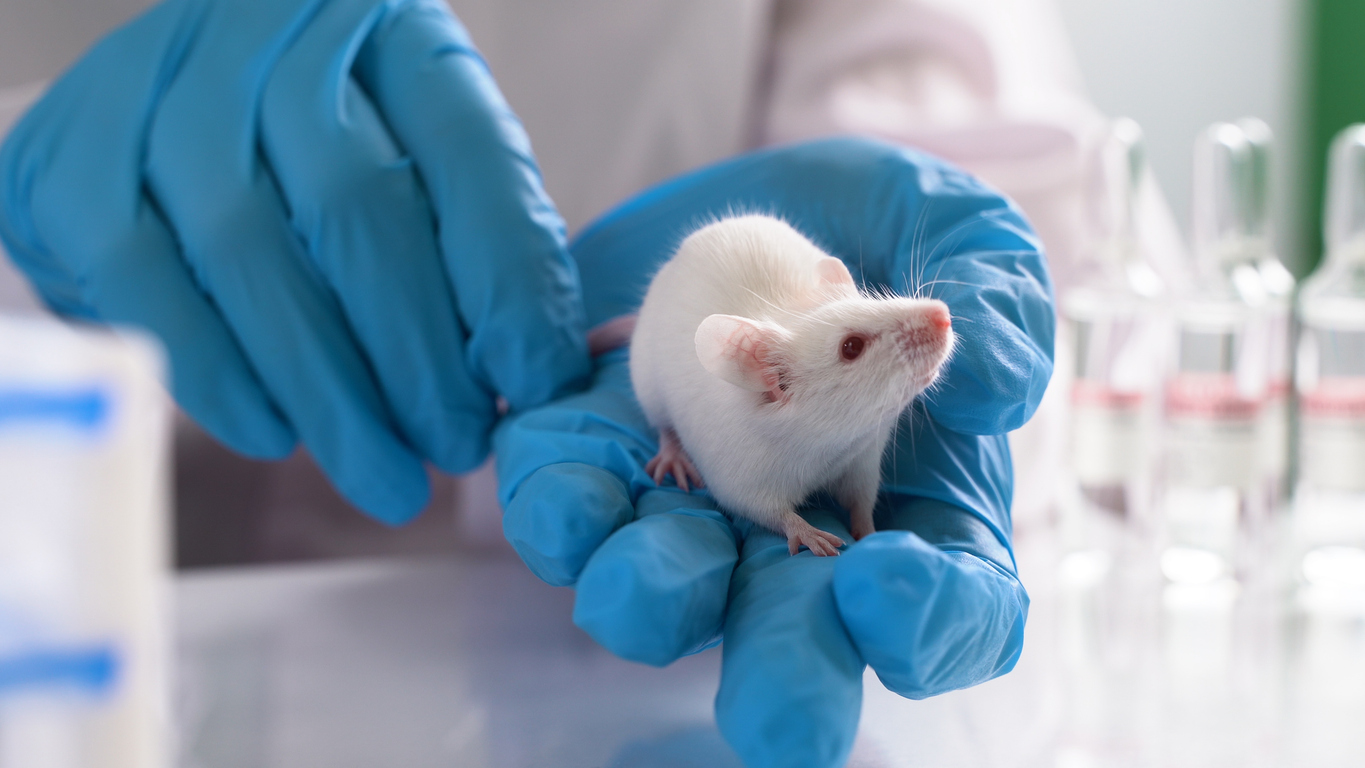
In strong language that at times mirrored that of animal advocacy groups, the agency committed to phasing out animal testing over the next 3-5 years, aiming to “make animal studies the exception rather than the norm for preclinical safety and toxicity testing.”
This move is wholly welcomed by CAARE, which has advocated for FDA to end its animal testing requirement since our beginning in 2014. Over the past decade we’ve seen many scientific breakthroughs in non-animal methods that have increasingly made animal drug testing outdated. CAARE has consistently pressured the FDA through multiple campaigns, communications, action alerts and submissions to public comments. In 2022, CAARE worked as part of a coalition that was instrumental in passing the FDA Modernization Act 2.0, which made history by allowing the agency to accept non-animal data for new drug approval.
FDA’s announcement was accompanied by a Roadmap to Reducing Animal Testing in Preclinical Safety Studies that outlines detailed steps to implement the plan. The roadmap describes a range of innovative non-animal methods (also referred to as new approach methodologies or NAMS) — including AI and machine learning tools, human cell lines, lab-grown organoids, and organ-on-a-chip systems — that offer human-relevant data at a fraction of the cost and time compared to inhumane, outdated animal tests.
Within the next three to five years, the FDA plans to explore existing drug toxicity data and develop an open-access international data repository that can be used to train computational models.
The agency will also encourage drug developers to submit non-animal data in parallel with human data and will waive animal study requirements in favor of NAMs where appropriate. Their long-term vision is a global regulatory environment where animal testing is largely replaced by approved NAMs.
FDA’s plan will initially focus on replacing animals in safety tests for monoclonal antibody therapies, lab-made proteins engineered to precisely target disease-causing cells. These proteins are designed to recognize human-specific molecules, so animal testing often fails to predict human responses especially for this class of drugs. Over the next year, the FDA will work with select monoclonal antibody developers to assess the effectiveness of their human-based test systems. If their new methods work, it will inform broader policy changes for testing chemical drugs and biologics, a large class of important medications including insulin, gene therapy and vaccines.
The plan will be implemented immediately for all new drug applications, which are “encouraged” by the FDA to include non-animal data. Additionally, the FDA will now accept pre-existing human safety data from other countries that have regulatory standards comparable to the U.S. to expedite the drug approval process and spare additional animal testing.
FDA’s new policy will have revolutionary implications for the paradigm of drug development. Stocks of companies providing animals for laboratories have already dropped globally. Notably, Charles River Labs saw a rapid 28% drop in its shares immediately following the FDA announcement, while AI-enabled biotech companies like Ginkgo Bioworks and NVDA Recursion Pharmaceuticals have risen.
FDA’s move to phase out requirements for animal testing of new drugs is a game-changing shift in policy that will spare suffering and death for thousands of animals while being more effective for human health and safety. It comes after years of hard work from animal advocacy organizations, while owing deep gratitude to the dedicated scientists who often went against the grain of their profession to develop research methods without animals.
Citizens for Alternatives to Animal Research and Experimentation (CAARE), is a 501(c)(3) non-profit organization, established to highlight and promote research without animals.
Please donate to support CAARE’s mission to reduce animal suffering by disseminating information about the power and progress of research without animals.

Showing 1 reaction